







Cement
Cement. The right grade for the work.
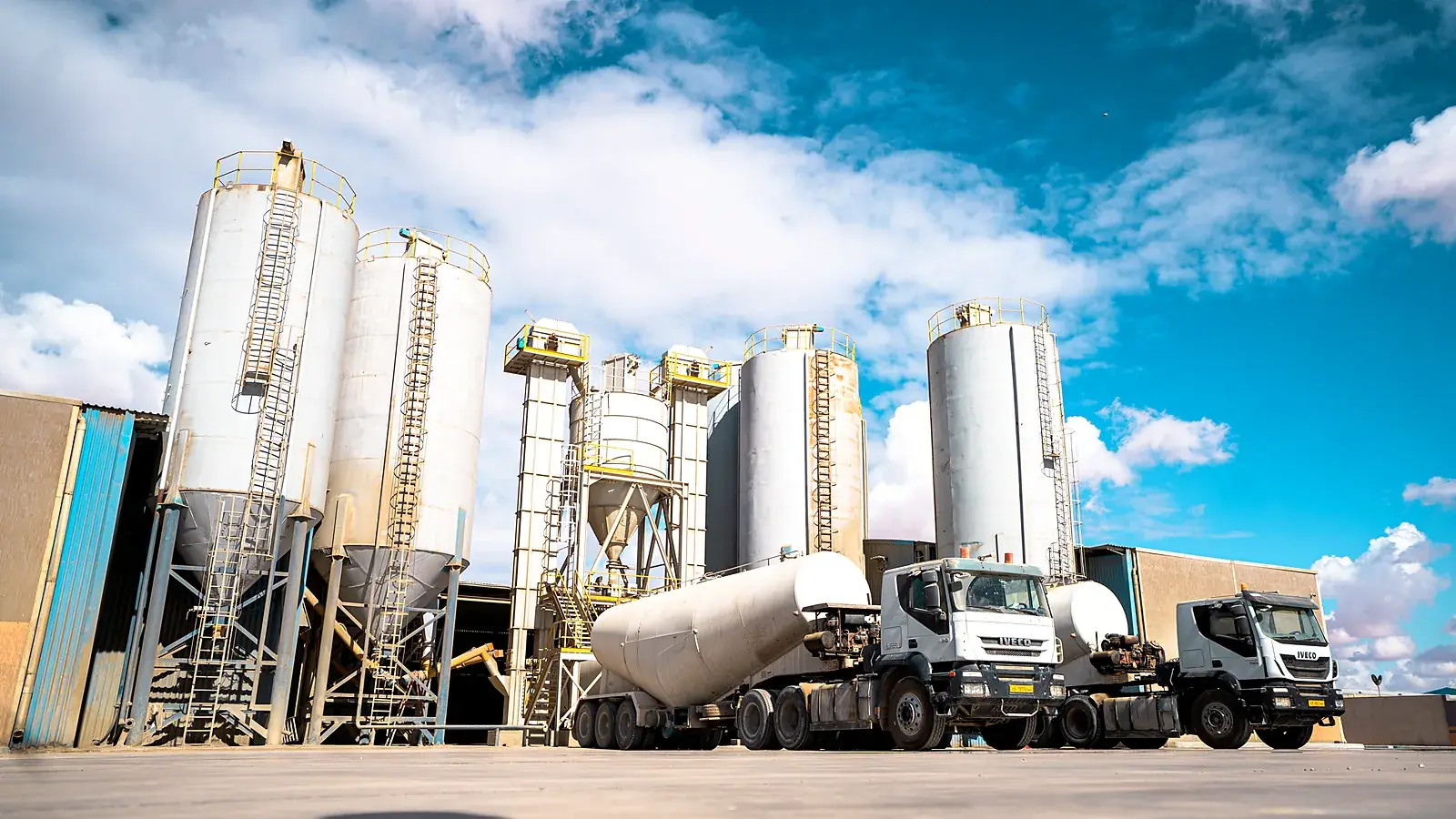
Our plant in Benghazi takes bulk cement from established producers into its own silos, packs it on two packing lines and delivers it to site in bulk or in bags with the group's own fleet.
- 50,000tonnes of storage in our silos
- 2packing lines at our plant
- 5grades to EN 197-1
- To sitein bulk or in bags, across Libya
How we supply
From our plant to your site.
-
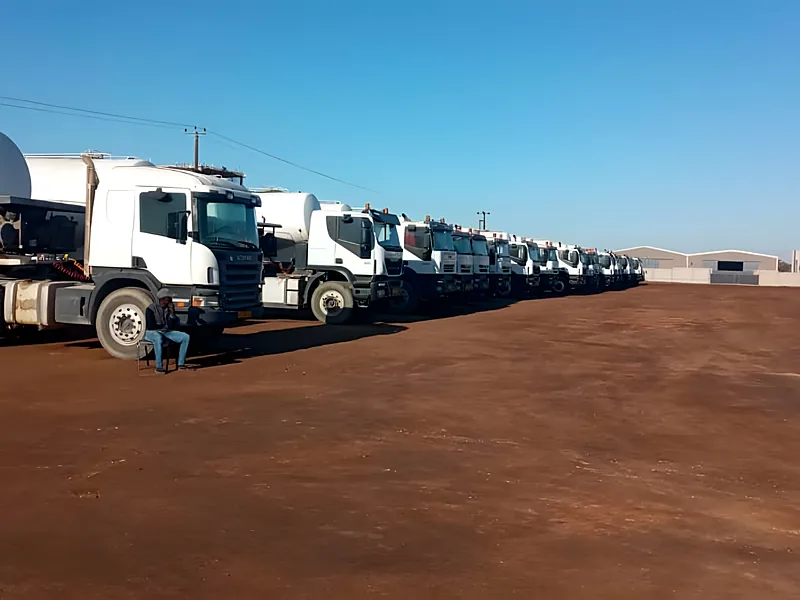
In bulk
Carried from our silos to your site in the group's own bulk-cement tankers.
-
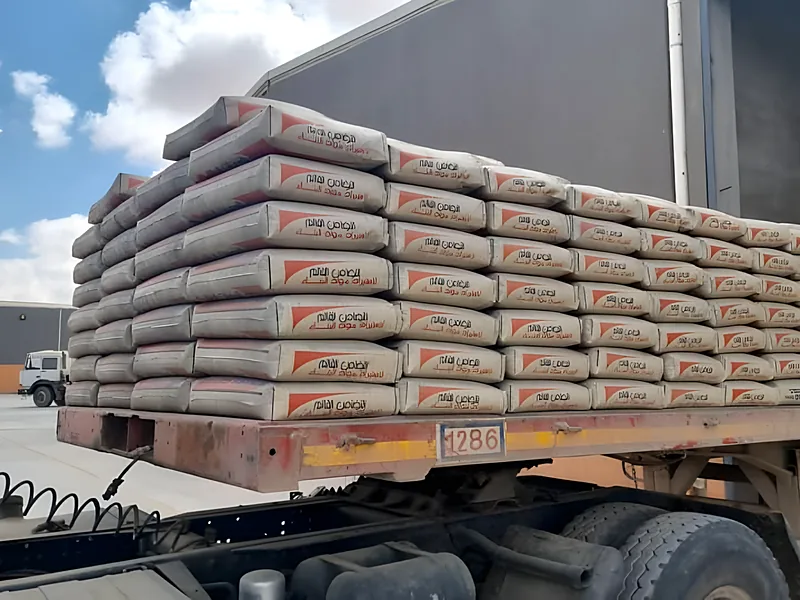
In bags
Packed at our plant in Benghazi, on two packing lines.
-
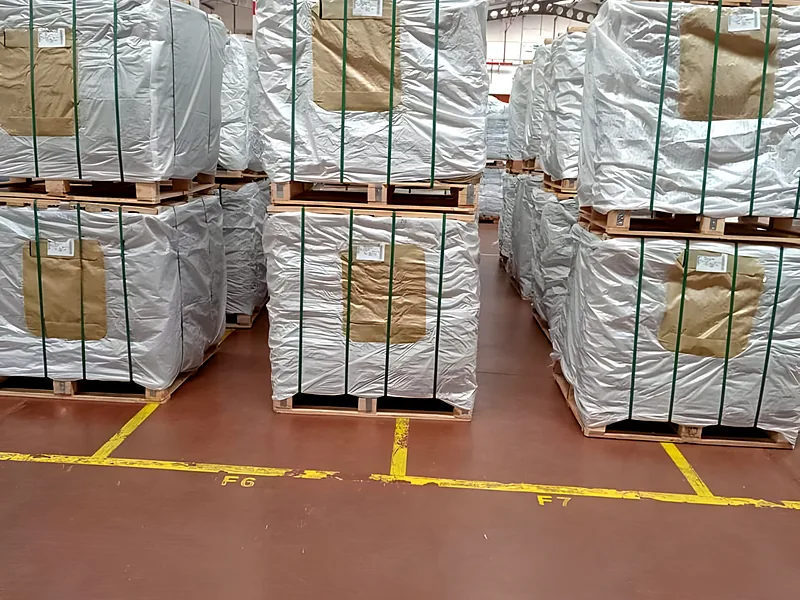
Priced per tonne or per bag
Tell us the grade, the quantity and the site, and we will send a price and a delivery date.

At the quay
Bulk cement from the vessel's hold into the group's tankers.
Choosing a grade
Which cement for which work?
Find your work in the list; each grade's card below says more.
- Everyday building: structural concrete, blocks, mortar and plasterCEM I 42.5N
- Ready-mixed concrete and general constructionCEM II 42.5
- Foundations in sulphate-bearing soil or water, coastal works, drainage and sewageCEM I 42.5N-SR5
- High-strength and precast concrete, early stripping of formworkCEM II/A-LL 52.5N
- Mass concrete, large foundations and marine worksCEM III/A 42.5N
The grades
Five grades, one standard.
Each grade is a common cement as the European standard EN 197-1 defines it: its type says what it is made of, its strength class what it must reach.
-
CEM I 42.5N
Portland cement
Used for
Structural and reinforced concrete, precast elements, blocks, mortar and plaster: the everyday cement of building.
95 to 100% Portland clinker, with calcium sulphate to control setting.
Strength class 42.5 N Ask for a quote -
CEM I 42.5N-SR5
Sulphate-resisting Portland cement
Used for
Foundations, basements and buried structures in sulphate-bearing soil or groundwater; coastal works; drainage and sewage structures.
Portland cement whose clinker holds no more than 5% tricalcium aluminate (C3A), the compound that sulphates attack.
Strength class 42.5 N Ask for a quote -
CEM II 42.5
Portland-composite cement
Used for
General construction, ready-mixed concrete, blocks, mortar and plaster.
65 to 94% clinker; the rest limestone, slag, pozzolana or another main constituent the standard allows. The subtype and the early-strength class (N or R) are those on the cargo's certificate.
Strength class 42.5 Ask for a quote -
CEM II/A-LL 52.5N
Portland-limestone cement, high strength
Used for
High-strength concrete, precast and prestressed elements, and work that needs early stripping of formwork.
80 to 94% clinker with 6 to 20% limestone, ground to the higher strength class.
Strength class 52.5 N Ask for a quote -
CEM III/A 42.5N
Blast-furnace slag cement
Used for
Mass concrete and large foundations, where its lower heat of hydration helps; marine works and structures exposed to chlorides.
35 to 64% clinker with 36 to 65% ground granulated blast-furnace slag.
Strength class 42.5 N Ask for a quote
The standard
What EN 197-1 requires of each strength class.
Show the standard's values
| Strength class | Strength at 2 days, at least (MPa) | Strength at 28 days, at least (MPa) | Strength at 28 days, at most (MPa) | Initial setting, at least (minutes) | Expansion, at most (mm) |
|---|---|---|---|---|---|
| 42.5 N | 10 | 42.5 | 62.5 | 60 | 10 |
| 52.5 N | 20 | 52.5 | – | 45 | 10 |
Compressive strength measured on standard mortar prisms (EN 196-1). These are the standard's minimum and maximum values, not the results of a particular cargo. Each cargo comes with its producer's certificate and an independent inspection report, which customers receive on request.